Sunday, April 12, 2015

Summery of SHRi Article: Are your job ads discriminatory?

01 April 2015, Singapore: This is a summary of an article from SHRi (Singapore Human Resources Institute) Human Capital magazine (Jan-Mar 2015 Issue). Good article for those in the talent acquisition field. If you are a new HR practioner taking up talent acquisition roles in Singapore please take note of the seven (7) criteria ... as the author wrote: it is a no-no's in Singapore recruitment advertisements. 

Nationality
Words or phases that excludes Singaporeans or indicate preference for non-Singaporeans, for example, 'Non-Singaporean / specific nationality preferred / welcome only', or 'EP / S Pass / WP / DP / LTSVP holders preferred / welcome / only.

Language
If a job entails proficiency in a particular language, the ad should explain why. For example' "Mandarin is an advantage" doesn't cut it.

Age
Words or phrases that suggest preference for candidates of a particular age, for example, 'Below 30 years old only'.

Race
Race should not be a criterion for selection of candidates.

Religion

Religion should not be a criterion for recruitment unless the job requires employees to perform religious functions as of the job.

Gender
Words or phrases that suggest perference for job candidates of  a particular gender.

Marital Status
Generally an irrelevant criterion, so for example,"Preferably singles' is not acceptable.


-- The End ---

Thursday, April 2, 2015

TED Talk: Dan Pink on Motivation

02 April 2015, Singapore: This is a video (18 minutes) about motivation. I was introduced to the video when I enroll for the COURSERA course 'International Leadership & Organizational Behaviour'.

After viewing the video, I have to agree with the presenter Daniel Pink. As a HR Professional, now I know why some jobs cannot be rewarded with money! Watch the video!

Click the hyperlink: Dan Pink on Motivation


--The End--

Thursday, March 19, 2015

Singapore: Why Expats Call This Utopia?

19 Mar 2015, Singapore: I guess this article tell you all you need to know about Singapore in a summery! But why expats still keep coming to Singapore ... is it business, profit or just location?

Click the hyperlink BBC: Why Expat Call This Utopia?


-- The End --

Saturday, February 14, 2015

Singapore HR Forum: HRmatters21

14 February 2015, Singapore: If you are a HR professional based in Singapore or have regional responsibility covering Singapore - you might want to visit this website 'HRmatter21'.

I got to know this website after purchase a book "A Guide to Singapore Employment Act and Its Practical Application" by Martin Gabriel.

It is an addition resources for HR professional. 

Click the hyperlink: http://hrmatters21.net/


--The End--

Book Review: "A Guide to Employment Act and Its Practical Application"

14 February 2015, Singapore: Out of boredom, I bought this book "A Guide to Employment Act and Its Practical Application". It has been ten years since 2005, I purchase reading material on Singapore Employment Act (EA).

To my surprise, the author Martin Gabriel did a great job on the book. I would recommend this book to someone who has basic knowledge of the EA and who need to advance their knowledge in the application of EA clauses and understand why specific clauses were written.

My take away from reading this book: It helped me to explain better to my German Managing Director and senior management team on the application of EA clauses from a HR Consultant perspective. I was able to impress them with my EA knowledge.

Conclusion, your job require you to have advance understanding of Singapore EA - buy and READ this book ...


--The End--

Monday, January 12, 2015

Website That Support HR Professional Who Need to Write JD and Conduct Job Analysis

12 January 2015, Singapore: If your job require you to draft job descriptions or conduct job analysis, you may want to visit the following website www.onetonline.org

O*NET OnLine is sponsored by the U.S. Department of Labor, Employment & Training Administration, and developed by the National Center for O*NET Development.

I was introduced to this website back in 2005 by a Mercer HR consultant.


---The End---

Saturday, January 10, 2015

Alan Collins: How To Make Your HR Day Job More Enjoyable, Exciting & Fulfilling

10 Jan 2015, Singapore: "Happy Belated New Year"! I received another short article from Mr. Alan Collins ... to keep the article short, I just share the essential information but it make a lot of sense. 

 1.  Look for role models in or outside of your workplace.

Case study on Mr. A.   He is currently director of Leadership Development at a University and a former HR executive. His passion is classic rock ‘n roll music, especially tunes by Bruce Springsteen, Tom Petty, and The Rolling Stones.

He incorporates rock music into all of the presentations he makes to students and his corporate clients.  He uses rock lyrics and quotes to get across key ideas when coaching corporate executives.  He’s also working on his first book addressing new rules for career management based on…you guessed it…rock music.

All this makes Mr. A distinctive, interesting, in-demand and keeps him pumped up about his day job.

In your case:  Are there projects, presentations, programs, co-workers, clients, situations, products, and critical business needs that might be waiting to incorporate those things you’re truly passionate about doing AWAY from work?

2.  Connect with like-minded groups within your organization.

Next, find other people at your workplace who share a similar interests.  Ask others: “What do you like to do for fun? How do you spend your time away from work?” If the company is of any size and your interests are anywhere near the mainstream, you’ll likely discover others who share your passions.

In your case, you can start with people in your company’s Employee Activities Committee (or Sport & Recreation Committee).  Most organizations have volunteer groups like these whose job it is to provide fun activities which engage the workforce.  Participating could have offered you opportunities to:
  • Help plan employees get together;
  • Coordinate the company functions or employment engagement event (e.g., Christmas party)
  • Sponsor charity fund raisers or volunteer works

3.  Above all, don’t walk around being a grouch — at least brainstorm possibilities.

A typical case: Ms. X hobby is into gardening and she is an expert in employee benefits. At work she wasted many years making herself and those around her miserable.  She walked around bitter and angry at the world, which prevented her internal customers and colleagues from wanting to work with her.

Instead of griping like Ms. X, try drawing two circles and listing the core aspects of your organization in one circle and the core aspects of your passion in the other. Then brainstorm ideas for how you could bring your interests and passions to work or how you could connect them to your current company’s business. Finally, see if there are places where the two circles intersect.

In Ms. X case, her brainstormed list of possibilities could have included:
  • Leading an in-house task force to improve the landscaping around our office building
  • Consulting with our factory locations on the landscaping and design of their facilities
  • Working with the building staff on plants in offices.
  • Identifying ways to spruce up outdoor corporate meetings and conferences

I don’t know if any of these would have interested her.  But they certainly wouldn’t have hurt. And I’m sure she could have identified fifty other possibilities like these that could have generated more excitement for her at work.

Worst case scenario:  If you’re burnt out on the HR work you’re doing, look for another job rather than fuming.

To wrap up this sharing …

"Bringing your personal passions, your interests and your full authentic self to work and connecting with others who share them is just ONE WAY…but a terrific way… to infuse more excitement into your day job in HR."

"And when you’re truly energized, engaged and fulfilled on the job, there is no end to where you can take your HR career."

Think about it.

---The End---

Sunday, December 21, 2014

12 Steps To Take Before You Lose Your HR Job

21 Dec 2014, Singapore: Received this interesting article from Mr. Alan Collins - I think every HR professional should know and be prepared.

-- By Alan Collins --

About to lose your HR job? Welcome to the group. Thousands of HR folks have been laid off in the last year.

Even though there have been positive strides in our economy, even more of our HR colleagues may lose their jobs before the year is officially over.

In fact, if you’ve ever seen the classic movie, Up In The Air (with George Clooney &  Anna Kendrick pictured above), you were brutally reminded of one indisputable fact… When the ax falls, most people are caught completely by surprise…are NOT PREPARED!


There’s an important message in this movie for HR professionals:  if YOU are getting downsized or fired from your own HR job, chances are you WON’T know about it beforehand.

You will not be warned. You won’t know about it until happens…even if you’re in charge of all company layoffs yourself.

Sure you can pick up on little clues.  If you don’t know what clues to look for, you can find them HERE. But whether there are clues or not, you do NOT want to be caught without a game plan.

So, with that in mind, here are 12 steps to follow if you think you’re about to get let go…

Step 1:   Accept that your HR job may not be safe.
Face reality.  Get your head around the fact that no matter what your position is in the company, nobody is indispensable.  But don’t space out.  If your leadership team has not yet selected who will be whacked, you want to improve your odds of being the one retained.  So stay calm, keep your head down and continue to focus on your job.

However, also prepare for the worst. If you’re not selected to be let go, that’s great. But if you are, you’ll minimize the bad feelings and gain greater control over your destiny if you start preparing in advance.

Step 2:  Start discreetly reaching out to your network.
Outplacement experts rightfully preach that networking is the best way to find another job.   So get a head start.  Use the time wisely while you still have your job.  Start very discreetly checking in with your colleagues, vendors, clients, co-workers who are now at other companies.

Set up breakfast and lunch meetings with as many of these folks as possible.  Your only objective at this point is to re-connect and line up these relationships so that you’ll feel more comfortable calling on these people for assistance later on should the ax fall on you.  Hopefully, you will have kept these relationships current…the worst time to start networking from scratch is when you need a job.

Step 3:  Prepare your spouse or significant other.
As tough as it may be to discuss your fears, you need to lay it on the line with your partner about your current job situation.  Trying to protect her him/her from possible bad news, while admirable, may well backfire if your partner feels that you have intentionally kept him/her in the dark.  If there are kids involved, talk about if, when and how you’ll break the news to them.  You’ll find suggestions here.

Step 4:  Investigate your company’s severance policy.
Being in HR, you know that most companies don’t disclose or publish any printed information on severance policies.  But most use a formula based on your level in the organization and your years of service.  Others just wing it as they go along.

So, finding out what you will be paid upon termination can require some digging.  Your best source of information will be other employees who have been recently laid off. As you gather information, it’s important to not only find out the amount of severance you can reasonably expect, but also:
  • Does the company make lump-sum severance payments or continue employees on payroll? Will your severance payments stop if you find another job?
  • Will they extend your insurance benefits?
  • Do they provide outplacement assistance?
  • Do they offer alternatives to severance? Some companies have recently started to offer employees leave of absence packages as an alternative to termination.


Step 5:  Begin taking possession of your personal belongings, personal files and e-mail addresses.
If you are let go, you could be escorted out on the spot and denied the opportunity to go back to your office and clean out your personal stuff.  Since there may be a question as to what belongs to you and what belongs to the company, now is the time to sort through your personal files and take them home. Just be careful not to remove anything that could be deemed to be company property or proprietary in nature.

Since your network is the key to a successful job search, you’ll want to be sure that you’ve got all the telephone numbers, e-mail, and address information of your valued contacts inside the company for future reference

If this information is maintained on company-owned equipment (such as a PC or PDA) copy those files on a CD and take it home.  Or copy all pertinent data to your home e-mail account.

TIP: Be subtle in your packing activities – you don’t want to create the impression that you’re expecting to be laid off. Although the company may not allow you back in your office after being dismissed, they will return your personal belongings so don’t feel the need to take down personal photos quite yet. But, consider removing anything you consider personal or valuable in a non-obvious manner.

Step 6:  Update your resume.
You should always have an up-to-date resume on your hard drive.  You never know when a perfect job opportunity might surface.  So don’t let an outdated resume prevent you from reacting to new opportunities in a timely manner.

Step 7:  Re-establish ties with executive recruiters.
If you’ve successfully worked with recruiters in the past, give them a call to touch base.  Send them your updated resume and a brief cover letter.

Step 8:  Use websites to help you explore HR job opportunities and produce job leads.
There are a growing number of websites that can produce job leads for you.  You input the specifications of your desired job – the job search agent will check all the jobs posted in its database and then periodically send you e-mails with postings that match your profile.  Here is a list of job search websites you can use.

Step 9:  Investigate job opportunities elsewhere within your company.
In some large companies, one division can be laying people off, while another division thrives and is hiring. If you have skills that might be attractive to other departments or divisions, look into options for transfer.

Step 10:  Hold off on long-term financial commitments.
If you have financial concerns, for now, it goes without saying that you should put off buying that new home, undertaking a major remodeling or purchasing that new car.  The last thing you need right now is to be hampered with new monthly payment obligations.

Step 11:  Pay off credit card debt.
With credit card interest rates, the cost of maintaining a monthly credit balance can be staggering. If it’s not possible to totally eliminate the debt quickly, investigate ways to consolidate the payments on a card with a lower interest rate.

Creatively increase your savings account.  Certain bills such as auto insurance, health clubs, etc. can often be paid in either a lump sum or installment payments. If you normally pay them on an annual basis, this may be a good time to look into monthly or quarterly payments instead. Surprisingly, the borrowing cost on these installment plans can be quite low, providing you with the option of maintaining a higher cushion in your savings account during this critical time period.

Step 12:  Use your employee benefits, before you lose them.
In the event of a job loss, your job benefits will most likely be eliminated. While you will be given the opportunity to extend your health coverage through COBRA, now is the time to maximize your other benefits.

Personal Days:   If you need to take time away from the job, save your vacation days by depleting your personal days first. After termination, you’re normally entitled to receive pay for accrued vacation time, while payment for unused personal days or holidays is rare.
Vision Benefits: If you’re entitled to a vision care plan, schedule your family’s eye exams and purchase of glasses/contact lenses immediately.

Max out your Medical Flexible Spending Account: If you are fortunate enough to participate in a section 125-reimbursement account, you can claim all eligible expenses (prescription drug costs, eye care, unreimbursed medical deductibles, etc.) incurred through your date of termination, even if you have not yet fully contributed to the plan. So, do what you can now to maximize those reimbursable expenses – schedule check-ups, order all needed meds, and get your family in tip-top medical shape at an unbeatable price!

Dependent Care: If your child is enrolled in a company-sponsored childcare program, you should investigate the company’s policy regarding your right to continue participating in that program following your termination. If that is not an option, begin to collect data on suitable childcare services in your area.


Other benefits: Is your company affiliated with a work-life service that provides helpful information about eldercare, referrals to summer camps, or daycare providers?  How about the little perks – like membership at Sam’s Club? Take advantage of these services while you are still eligible.


--- The End ---

Thursday, November 27, 2014

Trends in HR Technology .... 2015

27 November 2014, Singapore: Click the hyperlink if you are interested in the trend of today's HR Technology ...

Thursday, November 13, 2014

HR Recruitment Process: Background Checks in Check

13 November 2014, Singapore: Interesting article about "Background Checks in Check"


--The End--

HR Practical Lesson: Using Statistic to Support Argument ...

13 Nov 2014, Singapore: I came across this article via a Facebook friend of mine. I am not supporting the writer but I have to admit that he is good in using the statistics on Singapore to support his argument.

The objective of this article is to share with HR professional that we should learn from the author and make our justification in a structured manner.


--The End--

Saturday, October 4, 2014

Lazy HR Professional Series: Why Do Continuous Improvement Fail?

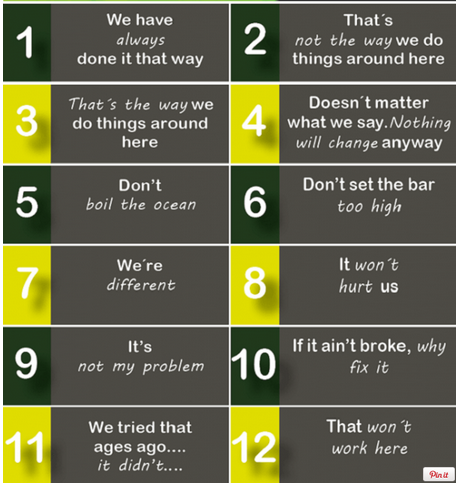
04 October 2014, Singapore: I will keep it short and simple - thanks to Torben Rick for sharing the 12 reasons why continuous improvement fail.


--- The End ---