Thursday, November 27, 2014
Trends in HR Technology .... 2015
27 November 2014, Singapore: Click the hyperlink if you are interested in the trend of today's HR Technology ...


Thursday, November 13, 2014
HR Recruitment Process: Background Checks in Check
13 November 2014, Singapore: Interesting article about "Background Checks in Check"
Click the hyperlink: http://www.talentmgt.com/articles/6938-keeping-background-checks-in-check

--The End--
HR Practical Lesson: Using Statistic to Support Argument ...
13 Nov 2014, Singapore: I came across this article via a Facebook friend of mine. I am not supporting the writer but I have to admit that he is good in using the statistics on Singapore to support his argument.
The objective of this article is to share with HR professional that we should learn from the author and make our justification in a structured manner.
Click the hyperlink: http://thehearttruths.com/2014/11/05/this-is-what-is-wrong-in-singapore-now-are-you-willing-to-see-it/

--The End--
Saturday, October 4, 2014
Lazy HR Professional Series: Why Do Continuous Improvement Fail?
04 October 2014, Singapore: I will keep it short and simple - thanks to Torben Rick for sharing the 12 reasons why continuous improvement fail.
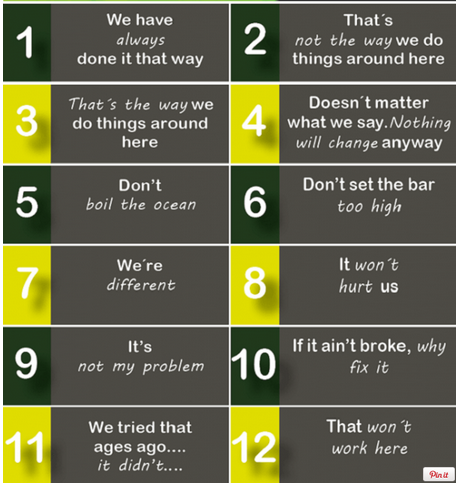
(source: http://www.torbenrick.eu)
--- The End ---
Monday, September 29, 2014
Lazy HR Professional Series: Free "Mercer" Compensation & Benefits Apps
29 September 2014, Singapore: If you are interested in regional compensation and benefits information, you should download and install the Mercer Compensation & Benefits apps (aka Mercer CBPAW) from Google Play.com
It provide basic information on most countries C&B statutory requirements and market practices.
Click the hyperlink: Mercer CBPAW

---The End---
Sunday, September 14, 2014
Lazy HR Professional Series: Talent Management Practices Wheel
14 September 2014, Singapore: I used this talent management model to share with my manufacturing management team as it provide a visible and logic diagram of how my HR Dept action items and strategic actions are supporting the new manufacturing production model.
Click the hyperlink for the source: http://sloanreview.mit.edu

--- The End ---
Tuesday, August 26, 2014
Lazy HR Professional Series: Local Plus: Gaining Popular Among European Organization
26 August 2014, Singapore: Based on my observation in the last 5 years, the concept of local plus is gaining popular among European MNC. I like to keep it short & direct - click the hyperlink.
What is 'local plus'?
Click the hyperlink http://www.eca-international.com - articles about local plus
What is 'local plus'?
Click the hyperlink http://www.eca-international.com - articles about local plus
Figures & Facts about 'Local Plus' from Mercer
Click the hyperlink http://mthink.mercer.com - graphic info about local plus

(Source from Mercer)
--- The End ---
Friday, August 15, 2014
The Power of Social Media: Look Up
15 August 2014, Singapore: Today, one of my Germany colleague manager shared with me this Youtube video ... entitled 'Look-Up'. It is a very beautiful video about how the smart phone technology is making us our less human and less friends ... From a HR perspective ... how do we start engage our workforce to be more human!
Click the hyperlink: "Look Up"

-- The End --
Saturday, August 9, 2014
Three Reasons Performance Management will Change ....
09 August 2014, Singapore: This is an article worth reading. It is written by Sylvia Vorhauser-Smith. It is not my usual "short & sweet" but a bit lengthy. Happy reading!
Click the hyperlink if you want to read it from the source: 3 Reason Performance Management will Change in 2013

Click the hyperlink if you want to read it from the source: 3 Reason Performance Management will Change in 2013
Three Reasons
Performance Management will Change in 2013
By Sylvia Vorhauser-Smith
Is
there any organizational practice more broken than performance management? Not
if you concur with Marc Effron & Miriam Ort who state “perhaps no talent
management process is more important or more reviled than performance
management.” In fact, it draws universal agreement on several fronts:
- everyone hates it – employees and managers alike
- nobody does it well – it’s a skill that seemingly fails to be acquired despite exhaustive training efforts, and
- it fails the test of construct validity – it doesn't do what it was designed to do, i.e. increase performance
Traditional
performance management programs have become organization wallpaper. They exist
in the background with little or no expectations for impact. Yet despite its
poor popularity, the concept of performance (at an individual and
organizational level) is critical to business success. It can’t just be
ignored.
Why is it so broken?
In a
large survey conducted by WorldatWork, 58% of organizations rated their
performance management systems as “C Grade or below.” That gets a giggle. The
performance management process itself gets subjected to its own methods of
setting criteria and rating performance against them – and fails.
I
believe there are three reasons almost all current performance management
systems are broken:
- People have changed
- Technology has changed
- People’s relationship with their technology has changed
Repairing
the damage? In order to compete in
today’s market, companies must move to adopt a much more agile performance
management approach.
People HAVE CHANGED
Employee
expectations have changed. It’s not just Gen Y – employees everywhere and of
every generation expect more. More involvement, more accountability, and more
transparency. When it comes to managing their performance, employees have
shifted from being passive recipients to active agents. Not satisfied with a
one-way download of performance feedback, employees want to participate in the
performance data collection process. And they liken the ‘annual event’ of a
performance review to arriving at the pearly gates on Judgment Day.
Managers
have changed too. Command and control is no longer cutting it – managers are
expected to guide and coach, provide balanced constructive feedback and
inspire, rather than enforce, performance.
Add
to that what science is now telling us about what really drives human
motivation. Like, goal pursuit motivates performance much more than goal
achievement, peak performance is best achieved in states of flow, and
multi-tasking only dilutes performance on all tasks undertaken concurrently.
Key Changes for High Performance?
Paradigm
shift. What used to work no longer does. Managers need to:
1) be real – communicate openly and
often.
2) set stretch goals and inspire
individuals to work to their potential.
3) get out of the way – trust their teams and
empower employees with accountability.
Technology HAS CHANGED
We’re
reaching a tipping point for technology in the talent management arena. It
began with simple automation: take the paper processes and put them on a
computer. Fine, but that left us with so many spreadsheets, Word templates,
proprietary systems and disconnected point solutions that we were drowning in
complexity and data overload. It also highlighted that many of the processes we
were automating actually needed to be revised, simplified or eliminated
altogether.
Baffled
by the complexity we created, focus in recent years has been on process
simplification, user-friendliness and redirecting attention to what actually
matters. A good step forward, but we still suffer from too much data, too
little meaningful information.
The
“big data & analytics movement” has now really raised the bar – not just in
terms of what data can be gathered, aggregated and analyzed but also how it is
filtered and presented to audiences to provide immediate management insights.
Activity lists are being replaced by composite dashboards, lengthy reports by
simple performance heat maps – yes, pictures, literally replacing thousands of
words.
Key Change for High Performance?
A
shift in focus from process to outcomes. Burn the forms. With technology
finally up to the task of producing meaningful information, managers can turn
their attention to driving performance outcomes rather than being bogged down
in laborious processes.
The relationship between people and
their technology
On
demand. Ubiquitous. Better, faster, cheaper.
It’s
really not so long ago that your only likely encounter with a computer was when
you went to work, laptops were expensive and rare, and mobile devices were
pagers and Walkmans. Today, can you even imagine getting past 10:00 a.m.
without having accessed a myriad of your online applications? We work online,
shop online, socialize online, we are connected 24/7 – online.
Enterprise
technologies are not far behind. Perhaps you are still in a workplace that
restricts or bans social media, but they are in decline. Perhaps your
organization refuses cloud-based applications for privacy or security reasons,
but they are in decline. The fact is: organizations that try to block out the
world simply ostracize themselves. And they are in decline.
Key Change for High Performance?
An
agile, social and mobile work environment. You will set dynamic goals and
adjust them in response to change; your manager will provide just-in-time
coaching wherever you are; skills and knowledge you need will be recommended
and streamed to you; your performance journal will continuously capture and
cluster feedback, ideas and suggestions from your peers and customers; your
formal annual performance review will be permanently deleted from your
calendar…and you will finally be in a position to manage your own career.
-- The End --
Lazy HR Professional Series: Performance Management System / Appraisal / Processes
09 August 2014, Singapore: Another research on the various articles on 'Performance Management', not limiting to system but other topics like checklist, processes, concept, etc.
Just click the hyperlink:

(source: http://www.cdc.gov/stltpublichealth/performance/Definitions.html)
-- The End --
Friday, August 8, 2014
Lazy HR Professional Series: Succession Planning Process
08 August 2014, Singapore: If you are looking for some reference material to draft your organization succession planning and just for your Master's course assignment - just click the hyperlink: -
I hope the above resources will be helpful to your work ... or just for the fun of reading ... KNOWLEDGE IS POWER

(source: https://www.opm.gov)
-- The End --
The Dangers Of Complacent Leadership
08 August 2014, Singapore: Yesterday, one of my colleagues reminded me that I have not been posting articles at my HR blog since May. I guess it is a good time to share this article, it is a reminder to potential HR Leaders and myself on "The Dangers of Complacent Leadership" by Glenn Llopis.
Click the hyperlink for the source:

Glenn Llopis
The Dangers Of Complacent Leadership
It’s easy for MARKET leaders to grow complacent
when they feel the alternative is to
take two steps back before taking one step forward in an effort to find their footing in today’s
changing terrain. As a result, larger corporations in particular become more
vulnerable to competitive pressures because they lose strategic focus and don’t
see the opportunities their emerging competitors are seeing and seizing.
Changing times require a change in one’s LEADERSHIP
STYLE and approach. Here are a few early warning signs to avoid the dangers of
complacent leadership.
1. Fear Settles In
When leaders begin to fear what is required to move
the company’s agenda forward – this is cause for concern. For example, many leaders don’t want to
manage through the political and/or employee dynamics that are associated with
changing times for fear of being left exposed and placed in a vulnerable
position.
While many leaders may not admit to being fearful,
it is becoming more common as the MARKET becomes more uncertain. As a leader, uncertainty must become your
best friend and you must tackle it head on by anticipating the unexpected and
taking action to solve for what lies ahead rather than waiting for others to
determine your fate. Adversity can make
or break you, but it primarily reveals you. Fear is a by-product of not always
knowing what the consequences of your actions will be in a changing
marketplace.
The more complacent you are as a leader, the more
unpredictable the environment becomes and your ability to control and lead in it.
2. Attention to DETAIL Fades
When the pressures mount, details fade. This is an early warning SIGN that
complacency is kicking in. Managing the
DETAILS is critical to maintaining your focus and keeping your eyes locked-in
on the moving parts around you.
You can see the lack of attention to detail in
meetings and in a leader’s preparation – or lack thereof. When leaders cut corners, quality
erodes. If they don’t know how to manage
speed in execution, their good intentions can spiral out of control and they
can potentially create negative consequences for the team and organization they
serve.
The devil is in the DETAILS. Don’t allow them to escape by becoming a
complacent leader.
3. Tension Unknowingly Begins to Mount
When leaders grow fearful of becoming exposed and
begin to lose the required attention to detail to effectively perform, they
begin to unknowingly create tension with others. When this happens, leaders
lose executive presence, and become disruptive and restless from the mounting
demands of their growing complacency – which begins to reverberate throughout
the rest of the team and amongst their colleagues.
Leaders are always in the spotlight and
collectively everyone is WATCHING everything they say and do. Don’t allow
complacency to disrupt your momentum.
4. Reactive Thinking
Leaders are expected to be proactive and timely
with their decisions, their outlook for the business, and the potential of
their people. When leaders are
complacent, they become slower, less decisive, they begin to accumulate bad
habits and the lens with which they see through gets blurry and full of blind
spots. As such, over the COURSE of time they become reactive rather than
proactive to the opportunities that are right in front of them.
Complacency can cloud a leader’s thinking – making
it more likely for them to miss a potential OPPORTUNITY
5. Stop Leading
Complacency can reach a point where a leader begins
to follow more than lead. Over time,
complacent leaders begin to play it too safe — losing respect, trust and
loyalty from their employees as well as other leaders in the organization. When this happens, they begin to lose
confidence in their own abilities, trust in themselves and in others. This behavioral shift makes them feel too
vulnerable to lead and more COMFORTABLE following.
Complacency can mark the end of a leader’s reign
when people stop valuing and respecting their authority.
Leadership expert Warren Bennis, who passed away
last week and wrote one of the most popular BOOKS on leadership, “On Becoming a
Leader,” was well ahead of his time when it came to not giving in to the
dangers of becoming a complacent leader. These are the types of leaders who
“get companies stuck in outmoded ways of doing things while the world changed
around them,” he said, according to his obituary in the LA Times, 8/3/2014.
Looking at things from this point of view,
complacency makes you more of a manager than a leader. And as he often said:
“The manager does things right and has their eye on the bottom line; the leader
does the right thing and has their eye on the horizon.”
-- The End --
Subscribe to:
Posts (Atom)