Wednesday, August 24, 2011

HR Business Partnering Concept

Another article NOT written by me ... but felt it is my responsibility to shared with my followers ...

Human Resources is not just a support function, it has to build a regular HR Business Partnering concept as it seen by the managers as the valuable partner for the business. The HR Business Partnering is about the understanding the business of the partner and helping to decide issues in the people management area.

The HR Business Partnering is about changing the focus of Human Resources. The people in Human Resources cannot be focused on solving the issues of managers and employees of the organization and they have to focus on delivering the value added to the business leaders and they have to focus on building new quality relationships across the organization.

The real business partnership is based on the common trust and it is extremely difficult to build a position of the business partner for Human Resources. The HR Manager can speak about the business partnering HR Model, but he has to be accepted as a partner in a discussion.

The HR Business Partnering model is about setting the HR Strategy and customizing it to the needs of the individual business partners, but within set boundaries. The business partnering is about the proactive approach of both partners, it is not about the requests of the business leader and potential solutions finding from Human Resources. They both have to work on elaborating the best suitable solution and it has to be a result of the work of both partners.

The HR has to be proactive in setting the business-partnering model. It is easy to say “I will be your business partner.” and it is extremely hard to say, “I really know, I am your business partner.” HR has to fight for its position as the department valuable to listen to. It is not built from a day to day, it takes months and years to implement the concept.

The HR Department has to change itself to be seen as the partner. The HR Business Partners have to be hired and they are usually the people with no previous experience in Human Resources. They have to learn the basics of Human Resources and they have to learn the details about their partners. They have to demonstrate their skills of the area of expertise of the client as they are accepted as partners in discussions.

Each HR Director has to think about the benefits of the HR Business Partnering model for the organization. Many organizations do not need such a concept and the HR Director should recognize it.

[Source: http://www.simplehrguide.com/hr-business-partnering-concept.html]

Tips on HR Business Partnering

This is not my article but felt it is a good reading for people who want to know what is HR Business Partnering ...

1. Know what the business drivers for change are. What do managers need to be able to do to deliver what the business requires? What will HR need to do to support them in this?

2. Decide how best to structure HR to support the line. Review how well HR is currently meeting these needs and make changes to deliver what is required.

3. Involve the business and HR in implementing partnering. It is important that people are involved in any changes that take place, as imposed models have little chance of success. We need to understand how the approach will work for everyone involved.

4. Ensure senior management are seen to be driving the changes. This is not just an HR initiative or fad, it is an organisational change and a whole new way to deliver support services to add value in a cost-effective manner.

5. Recognise the impact it will have on line managers. Are managers 'willing', 'able' and 'allowed' to change. You will find resistance if any of these conditions are not met.

6. Be very clear on the roles within HR. Ensure everyone is very clear as to their responsibilities. Wherever possible, ensure that it is the HR business partners that drive what is required within HR to meet the needs of the organisation, rather than the more central parts of HR or indeed line managers themselves.

7. Know how all the roles will work together. Choose some key situations, such as implementing a new organisational strategy, developing the people plan, disciplining a very senior manager, implementing a new job evaluation program or managing a large scale recruitment, and track through with the whole of the HR team, exactly who will do what and where the 'hand-off' points will be and how they will take place. Be clear on the entry points for managers as well as those for other employees.

8. Continually review effectiveness of the model you have introduced. It is unlikely that you will get the model that suits you straight away. Making the necessary tweaks and changes as required will increase chances of long-term success. Include line managers in your reviews.

9. Make sure you have the right people in the right roles. Not everyone is suited to the more strategic role of the HR business partner and it is often down to preference and attitude as much as it is to skill. Put in place a development program for all individuals and roles to help people to meet their career aspirations.

10. Where possible, use virtual teams and align to different parts of the business. By introducing a formal HR business partnering approach, you will have broken the service up into bits. It is important for the line that these areas then work together again in teams to deliver a seamless service for different parts of the business.

(Source: http://www.hcamag.com/resources/learning-and-development/steps-to-successful-hr-business-partnering/113976/)

Thursday, August 18, 2011

Thinking of Outsource "Whistle Blowing" or "Compliance Reporting"

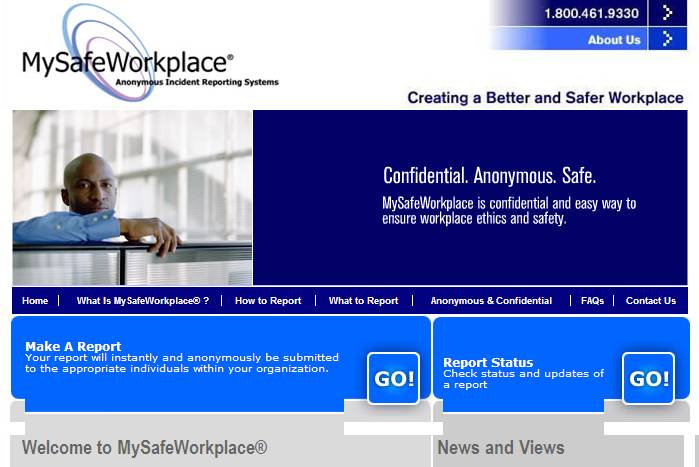
Just drop in to share with you all that you can outsource your whistle blowing or compliance reporting mechanism to this company that is managing the website "My Safe Workplace".

You can visit the following website: http://www.mysafeworkplace.com/Home.aspx

Friday, August 12, 2011

What is Garden or Gardening Leave in HRM Context?

Garden leave (or Gardening leave) is the term given to a situation whereby an employee is required to serve out a period of resignation notice at home.

During this period the employee continues to receive all salary and benefits but is prohibited from commencing employment with new employers until the gardening leave period has expired.

It is a practice which employers often adopt with employees who have access to confidential information or customers and where they are leaving to join a competitor.

During the gardening leave period the employee’s access to such information or customers is restricted.

What is Voluntary Separation Scheme (VSS)?

Voluntary Separation Scheme (VSS) is a scheme where employees are allowed to resign voluntarily from an organization by receiving fair compensation. The purpose of organizations implementing VSS is to reduce the headcount of employees working in the organizations so that the overhead cost especially employment cost can be reduced. The employees will be given a reasonable compensation to resign from the company for each year of service.

Usually, most organizations choose not to retrench / lay-off their employees in order to reduce the headcount of employees. It is to avoid bad reputation to the organizations.

In some countries, organization may need to get approval from the government (e.g., Ministry of Human Resources; Labour Dept; etc.). One of the criteria the government considers in approving VSS is that the organization is losing money for a certain period of time or has implemented other alternative cost cutting measure before resulting to retrenchment / VSS.

Thursday, July 28, 2011

What is the difference between Contract of Service and Contract for Service?

A contract of service is an agreement whereby one person agrees to employ another as an employee and the other agrees to serve his employer an an employee. The employer would need to contribute statutory retirement pension / fund and provide relevant statutory benefits such as annual leave and sick leave.

A contract for service is an agreement whereby a person is engaged as an independent contractor, such as a self-employed person or vendor engaged for a fee to carry out an assignment or a project for the company. Under such an arrangement, there is no employer-employee relationship, and the person is not covered by a country Employment Act.

(source: Guide on Employment Laws for Employers, Singapore MOM April 2010) 

Friday, July 15, 2011

What They Don't Teach You in College: "Dip vs Degree"

This is just some of my research work from the Internet. No really my own piece of work. Enjoy reading it.

Thursday, July 14, 2011

What They Don't Teach You in College: "Evaluation of Foreign Educational Credentials"

In this article - I would like to share with you about company that can help HR professional conduct evaluation on the candidates' educational credentials. When designing your job advertisement targeted at foreign country, you can inform the applicants to use the following website to get their educational credentials validated to the USA standard.

World Education Services (www.wes.org tel: 212-966-6311)


Educational Credential Evaluators, Inc. (www.ece.org, tel: 414-289-3400)

Tuesday, July 5, 2011

Common Mistake Done By In-house & External Recruiters (Headhunters)

Common mistake are:
  1. Never feedback / up-date the candidates about (a) the progress of job application and why their application was rejected. 
  2. Officially informing the candidates that their applications is rejected because their clients budgeted (company) remuneration package is below the candidate current package.
  3. Asking the candidates to consider the job officer at same rate or lower.
  4. Asking the question (a) "reason for leaving" and (b) "last salary" for past jobs. This questions should only be applicable on the candidate's last company / organization.
  5. With the new generation "Y" coming to the workforce; the dynamic labour market and business environment - the term "job hopping" is not applicable anymore. A change in minds is required ... any one who has a track record with a company for 2 years is good enough nowdays!
  6. Advertising the jobs as 'strategic' but during interview asking orperational questions that doesn't probe the candidate's competencies in strategic issues and planning.
  7. In an international / overseas recruitment project - recruiters fail to understand the education system of the targeted country where the candidate is educated .... e.g.,  (i) associate diploma = general degree; (ii) associate degree = diploma; (iii) general degree = non-honor degree; (iv) Professional Diploma = Degree; (v) Professional Certificate = Diploma.
  8. When interviewing an experience candidate with more that 10 years of working, interviewer should focus on identifying the relevant experiences; job competencies; and value-added knowledge and skills to the organization. Focus less on academic / educational qualifications.

Tuesday, June 21, 2011

Emerging HR Practice in Singapore: "No Medical Certificate" Required!!

Since last year March or April 2010, my company started practicing "no medical certificate" if you need to take half day or one (1) sick leave. This is one of the positive action taken by the company management. I just hope the employees don't "miss-use". I guess it worked well for my organization is because it is a regional management office and most of the employees are of middle and senior management staff category who 'clocked' more eleven (11) hours a day.

In recent month, I received a few emails and calls asking if my company was into the "no medical certificate" practice for one (1) day sick leave. I happily mentioned to them "Yes" but some of them were 'skeptical' about the practice.

For the 'skeptic' ... I shared with them the following ...
  • in India and Indonesia - most companies only require the employees to produce "medical certificate" if they are taking medical / sick leave more that 2 days (meaning 3 days).
  • why no medical certificate required? The countries I mentioned above, medical facilities are not easily accessible and it can be expensive for low wages employees to seek medical treatment and ask for medical certificate.
  • practice self-healing or medication. Feedback from our employees: sometimes they are just dizzy or having a mild flu. They only need to rest at home and self medication e.g., taking 'Panadol' (Paracetamol).
  • company policy / precaution - since our management office is small, we always advise  our employees that if they are having flu, please stay at home - don't come to office and spread it to other... maybe this is why in Singapore during the flu season it became an epidemic! 
  • can be a 'cost saving' effort. If every time our employee need to take medical / sick leave and the management impose them to submit a medical certificate from the company doctors ... ask yourself ... who is paying for it ... end of the day ... it is still the company bearing all the cost and if it is a co-payment scheme ... at least 80% of the cost is bear by companies.
With these sharing, I would like to stress that for the 'no medical certification' policy to be successfully accepted by company management and the HR community ... the key word is 'trust'.

Friday, June 10, 2011

Website for Job Descriptions

For the past few days, I have been drafting some job descriptions and it trigger me to write a short article on this topic.

Over the years, I have always find it useful to make references on the following website for some JD "juice" ... please click the hyperlink to visit the following website

Wednesday, June 8, 2011

Website: "SME Toolkit Singapore"

Singapore, 07 June 2011 - Yesterday, I don't know what I click in the Internet and ended-up to this website page known as "SME Toolkit Singapapore". It was a blessing for me, another HR related website to my collection. The website has other non-HRM topics like:
  1. Accounting & Finance
  2. Business Planning
  3. International Business
  4. Legal & Insurance
  5. Marketing & Sales
  6. Operations
  7. Technology
  8. Workshop
Note: Do remember, you need to register (it is simple and free!) to enjoy the access to tons of templates and samples. Please click the hyperlink to visit the website: http://singapore.smetoolkit.org/singapore/en/category/1384/Compensation-Benefits